
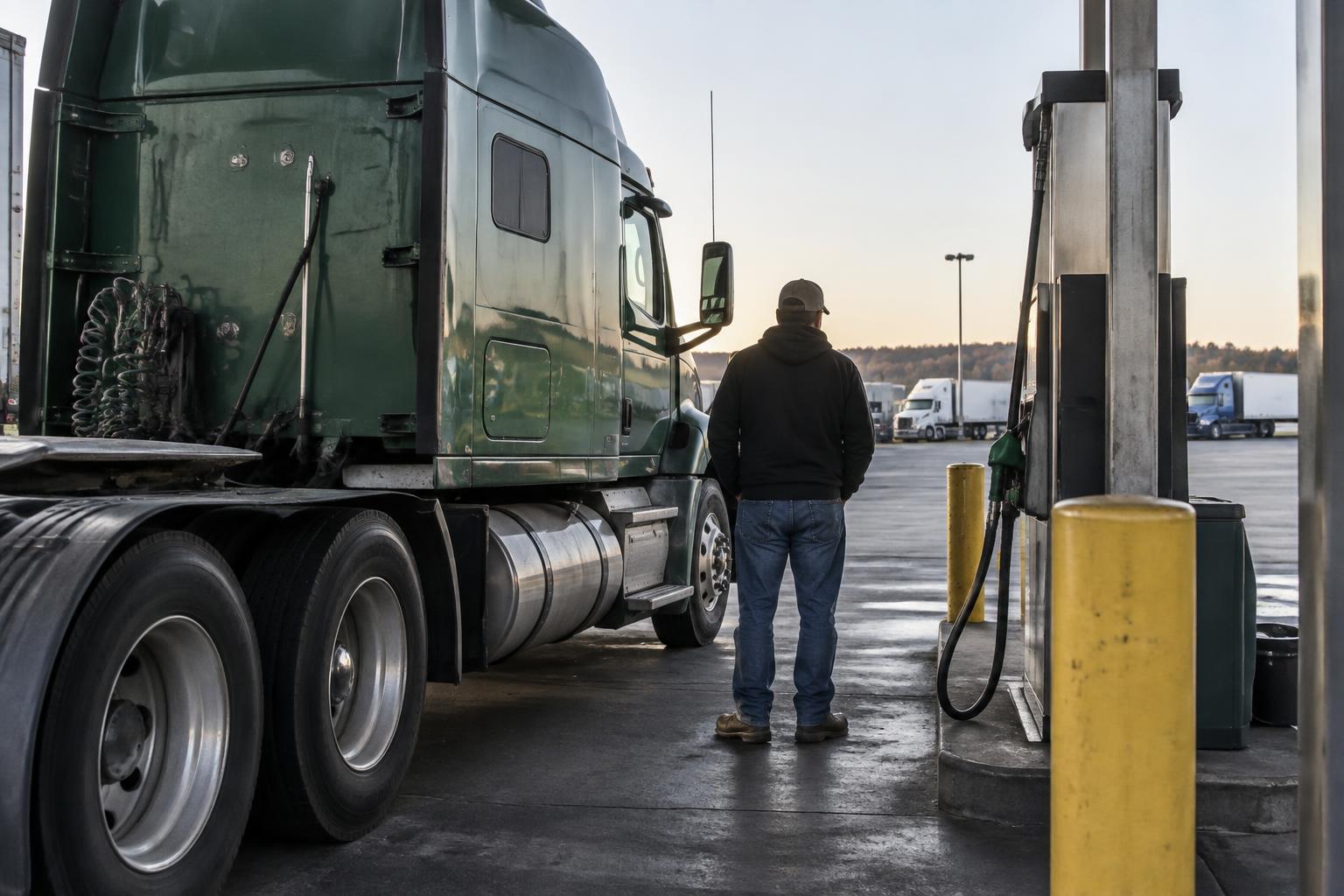
On October 1, some independent truckers are talking about parking their rigs. That is not the same thing as a confirmed nationwide strike. The distinction matters to anyone trying to make sense of the posts circulating online — and to drivers making a decision about their next load.
As of publication on October 1, we have not found evidence of an organized shutdown across the U.S. trucking fleet. Overdrive's reporting on drivers planning to park describes individual commitments and owner-operators already sitting out. Its earlier interviews also caution against treating the viral participation claims as a head count. How many trucks will actually stop — and for how long — remains unknown.
The fuel bill behind the talk
The pressure is measurable. The U.S. Energy Information Administration's weekly diesel series puts the national on-highway diesel average at $6.382 per gallon for September 28, 2026, down from $6.529 the week before. California averaged $8.181 in the same weekly report. A pump price in one state, or at one stop, can be different from either average.
At 7 miles per gallon, $6.382 diesel works out to roughly 91 cents of fuel per mile ($6.382 ÷ 7). That is before tolls, insurance, maintenance, tires, a truck payment or the miles driven without a paying load. It is a cost example, not a calculation of any driver's profit.
One Pennsylvania owner-operator told Overdrive he paid about $6.50 per gallon even after a discount and had already parked. In his own account, roughly one dollar of a three-dollar-per-mile rate went toward fuel. That is his experience, not a national average.
Who is parking — and who is not?
The public discussion centers on independent drivers and owner-operators, who buy fuel and carry the operating costs themselves. Company drivers generally do not pay for their truck's diesel out of their own pocket. Neither group should be treated as if every driver has made the same choice.
There is also a difference between parking because a load loses money and joining an organized strike. Both can take trucks off the road. Neither, by itself, proves a nationwide work stoppage. Even a large number repeated in a social post cannot tell us how much freight capacity is unavailable without reliable participation data.
What to watch next
For drivers weighing a load, the useful numbers are local fuel price, loaded and empty miles, the actual rate, the fuel surcharge if there is one, and the rest of the truck's fixed and variable costs. For everyone watching the October 1 story, look for documented participation and sustained changes in freight availability rather than claims that shelves will be empty. Supply-chain effects depend on the scale, locations and duration of any disruption; shortages are not an established outcome.
Bottom line: Diesel costs are real. Individual drivers have publicly said they will park or already have. A coordinated nationwide strike, its size and its effect have not been established as of this article's publication.
This SHOD Express article is adapted from an article supplied by Golden Touch Logistics, credited here for the original editorial framing. Fuel figures: U.S. Energy Information Administration and its California weekly series. Driver interviews and strike reporting: Overdrive and Overdrive's earlier interviews. Figures and reporting reflect what was available on October 1, 2026.